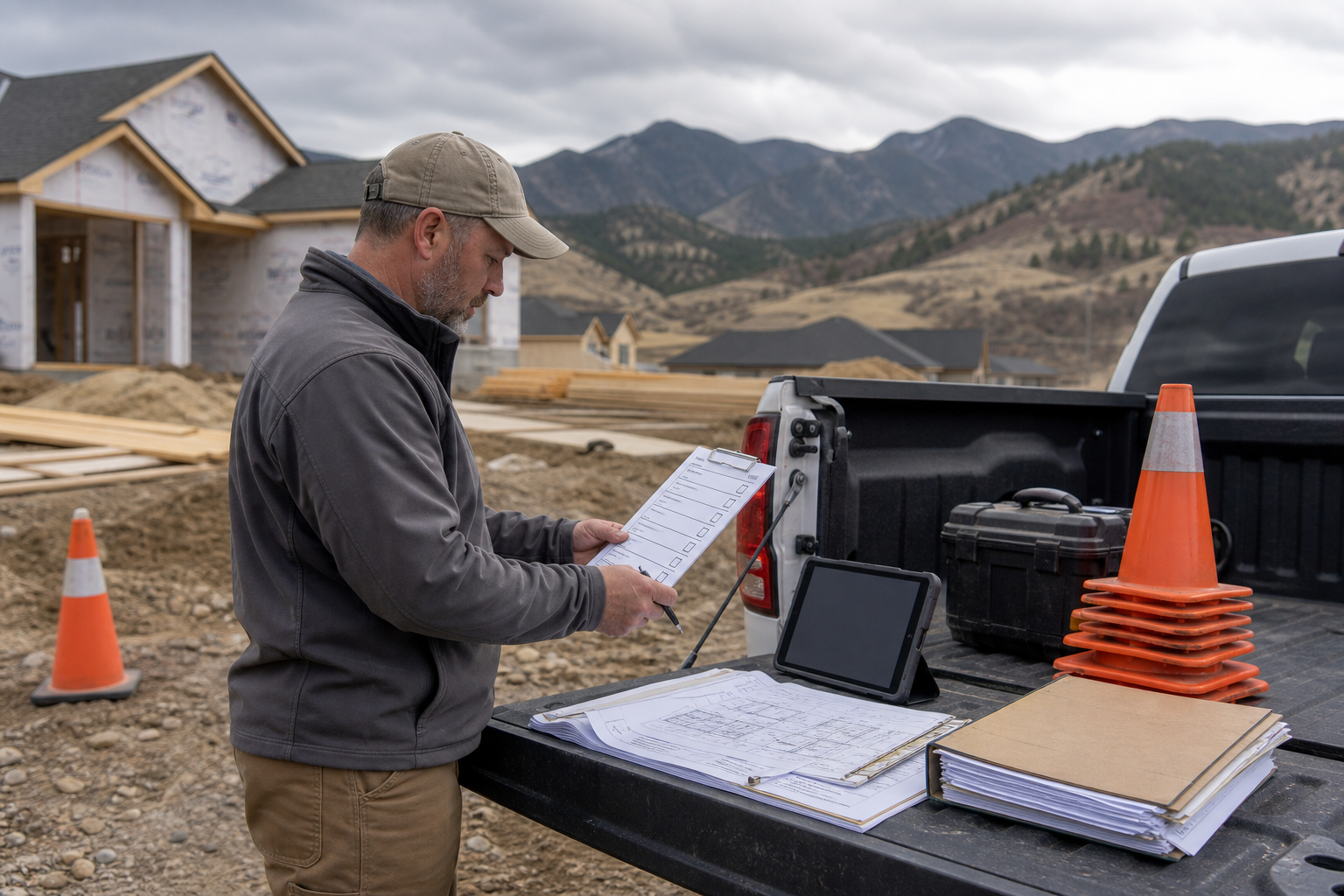
Ask this first: what kind of blocker is actually stopping the work?
A jobsite disruption checklist for contractors works best as a field diagnosis. Before anyone rebuilds the schedule, sort the symptom, run a quick self-check, interpret the blocker and choose the next controlled action. The answer may be to hold the work, capture the record, send one update, move the schedule, or resume a controlled task, but the symptom decides which one comes first.
Key points for this checklist:
- If safe entry is unclear, keep affected work paused until the next task can be controlled.
- Document the site condition while it is still visible, especially when photos or video would clarify the record.
- Notify people from one update trail so the owner, GC, crew, subs and suppliers are not working from different facts.
- Treat permits, inspections and utility locates as official gates when they control the next task.
- Restart only after the safety, record, communication and gate checks are clean.
Spot the disruption symptoms before assigning fixes
Start by naming the symptom. Is there a safety or re-entry concern? Did weather, water, equipment, material damage or a near miss change the work area? Is the crew ready but the inspection, permit note or utility-locate status unclear? Or is the work technically ready while the people who need the update do not have it yet?
This diagnostic step matters because a schedule answer can hide the real risk. OSHA emergency-preparedness guidance for construction says emergency action planning should be site-specific and adjusted as conditions change. OSHA also warns against re-entering a job site or structure without a clear indication that it is safe. That puts safety and site condition ahead of the calendar.
Use plain categories. A disruption usually starts as one of five symptoms: unsafe or uncertain entry, missing field evidence, unclear handoffs, official-gate uncertainty, or restart readiness. If more than one symptom is present, handle the safety or official-gate symptom before treating the delay as a simple scheduling problem.
Run the field self-check: safety, records, people and gates
Before updating the plan, run four checks. Can people safely enter the affected area? Is the changed condition documented? Do the affected people know what changed? Are the permit, inspection, utility-locate or supplier gates known enough to schedule the next task?
OSHA hazard-identification guidance supports inspecting the workplace, collecting hazard information, investigating incidents and near misses, and documenting inspections with photos or videos when useful. That does not turn this checklist into a legal claim file. It simply keeps the jobsite record clear enough for the next supervisor, subcontractor or inspector to understand what changed.
60-second self-check table
- Unsafe or uncertain re-entry: keep the affected area out of production and verify the condition.
- Missing photos or scope detail: capture the record before conditions change.
- Conflicting handoffs: send one source-of-truth update.
- Unresolved permit, inspection, locate or supplier status: check the responsible source before moving crews.
- Clean safety, records, people and gates: brief the crew and resume the next controlled task.
The self-check should be quick enough to use from a truck, trailer or phone call. Write down the project address, the exact affected area, the visible condition, who was present, which work is paused and who owns the next action. If the disruption touches deliveries or subcontractor coverage, the SBA's continuity planning guidance is useful because it emphasizes stakeholder communication and vendor or supply-chain alternatives.
Interpret the blocker: safety, records, communication, official gate or restart readiness
Once the self-check is complete, classify the blocker. Safety uncertainty means the affected work stays paused. Missing evidence means document before the condition changes. Communication uncertainty means notify the crew, owner or project partners before people act on stale assumptions. Permit, inspection or utility uncertainty means the next step is an official-gate check, not a crew shuffle.
Field diagnosis to next action
Symptoms
Name what changed: unsafe entry, missing records, unclear handoffs, unresolved permit or utility status, or restart readiness.
Self-check
Check safety, records, people and official gates before assigning a schedule fix.
Interpretation
Classify the blocker as safety, records, communication, official gate or restart readiness.
Action route
Route the result to the right field move: hold work, capture evidence, send updates, adjust timing or restart. If a gate is unclear, return to the self-check.
Use the symptom and self-check result to pick the next controlled move instead of rebuilding the schedule too early.
For excavation or demolition work, Colorado 811's professional-excavator guidance is a gate to consider. It tells excavators to submit locate requests, check Positive Response, confirm markings and use re-notification or emergency processes when markings or conditions require it. If that status is incomplete, do not treat the work as restart-ready just because labor is available.
For permitted work, use the authority responsible for the jobsite. Denver's building-permit-status page is one local example: it points contractors to permit records, approved plans, scheduled inspections and inspection results. Other Colorado jurisdictions may use different systems, so the article should not imply a statewide portal.
Choose the next controlled field action
Choose one field action from the diagnosis. Hold the affected work when safe entry, utility status or permit/inspection authority is unclear. Capture evidence when the main gap is proof of what changed. Send an update when people need the same facts before work moves. Move the schedule when the blocker is an official gate, material arrival or subcontractor handoff. Resume only when the other checks are clean.
A useful pause is specific. Name the affected area and the work that is paused, not the whole project unless the whole project is affected. A useful documentation action is also specific: save photos, weather or access notes, inspection references and who was told. A useful notification tells people what changed, what is paused, who owns the next decision and when the next update is expected.
If inspection timing is the blocker, use the deeper permit-specific guide at permit and inspection delay checklist for Colorado contractors. If the disruption shows that the company needs a broader operating plan, the next page is contractor continuity planning, not a longer version of this checklist.
Confirm restart evidence before the crew moves again
Restart is not just the final item on a list. It is the last diagnostic pass. Confirm the affected area is safe for the next task, the field notes are saved, the right people received the update and any utility-locate, permit or inspection gate is current for the work being resumed.
Then brief the crew on the revised sequence. Keep the briefing practical: what changed, what is still off limits, which task is next, who is watching the constraint and what would send the job back to pause. If any answer is unclear, return to the matching action instead of forcing a restart.
This is also where records matter for later review. If the delay may affect insurance documents or business records, save the operational facts and use a separate document review such as the contractor insurance documents checklist. Keep this page focused on what the field team does next.
FAQ: diagnostic edge cases after a jobsite delay
Use these questions to rerun the diagnostic when the disruption is not obvious.
Frequently asked questions
Do short jobsite pauses still need notes?
Yes, if the condition changed or a handoff could be disputed later. Keep a short field note with the date, affected area, observed condition and next action owner.
What if utility markings or Positive Response are incomplete?
Keep the result in the official-gate category. Colorado 811 guidance tells professional excavators to check Positive Response, confirm markings and use re-notification or emergency processes when markings or conditions require it.
When should an inspector or permit office be contacted?
Contact the responsible authority when the disruption changes inspection timing, approved-plan assumptions or permit status. Denver's permit-status system is one official example of checking permit records and inspection results.
Does this checklist decide contract delay responsibility?
No. Use it to preserve operational facts and choose the next field action. Contract claims, delay damages and legal strategy are outside this checklist.
The shortest safe version is still the same: name the symptom, run the self-check, interpret the blocker and choose the next action. If the answer depends on a safety condition, utility locate, permit status or inspection result, verify that source before restarting the work.